The combination of technology and state-of-the-art tools and equipment means that architects and construction firms around the world are reaching even greater heights and completing projects that just a few years ago would have seemed impossible.
To help inspire you on your next construction project, we have shared some of our favourite of the world’s biggest construction developments, check them out…
Three Gorges Dam, China
It took a whopping 17 years to complete and cost $59 billion! The world’s largest dam, it stands 595 feet tall, 131 feet wide and over 7600 feet long! Producing electricity (in 2014 it set a world record for the amount generated), the dam also aims to help reduce flooding.
One World Trade Centre in New York
A relative snip at a cost of just $3.8 billion, the One World Trade Centre is the tallest building in the western hemisphere, rising symbolically to 1776 feet. The glass and steel structure features a concrete core that offers extra strength.
Crossrail project, LondonExpected to be completed by 2019 and costing billions, Crossrail is a new 73-mile railway line under construction in London. 26 miles of new tunnel will eventually connect 40 stations, ten of which are brand new. One of Europe’s largest railway and infrastructure projects, it is hoped the new line will ease the burden on the capital’s underground system.
Songjiang Hotel, China
Taking a surprisingly short two years to build, this $538 million hotel has been built into a 328-foot quarry face. Featuring 19 floors, guests can dine in the underwater restaurant, as two of the hotel’s floors are completely underwater.
New Century Global Centre, China
A whopping 18 million square feet, (it could fit 20 Sydney Opera Houses inside), the New Century Global Centre is a shoppers paradise. As well as shops galore, visitors will find a beach, a cinema and a water park. It even features a man-made sun to ensure light filtering in through the glass roof is always bright
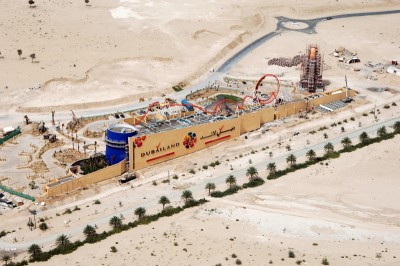
Dubailand, Dubai
Making the New Century Global Centre feel ‘compact’, is Dubailand, which will be the world’s biggest theme park (Walt Disney World could fit in it three times over). Once completed, expected in 2025, visitors can choose to stay at one of the 55 hotels, visit the theme parks, sports venues or the giant mall.
While it is unlikely you will be building a rival to Dubailand, your next project will no doubt also require expertise, knowledge and vision. Here at Red Band we supply a wide range of professional standard construction tools and equipment that make tackling even the toughest jobs easier. To place an order, or for help and advice, call the team on 0116 260 2601.
Buying a robotic lawn mower is the latest gardening gadget and the most efficient way to maintain your lawn. There are several models of Automower® to choose from, but have you thought about how to get set up?
Installing your Automower®
After we have assessed the property and established the area of mower operation, we then embed the boundary wires, set up the machine and test its operation to ensure it can run to and from the base docking station. If your lawn contains water features, trees or dividing pathways, the installation and consultation ensures that the robotic mower only operates where it is safe to do so.
Here are the basic steps to take when installing an Automower®:
Set up the docking station
Find a good spot for your charging and docking station in your garden. This area needs to be away from direct sunlight and out of the range of sprinklers or regularly hosed areas.
Charge your Automower®
Connect the machine to your docking station and allow it to charge for up to 100 minutes. Ensure the path to your docking station is clear for the mower to drive in and charge automatically.
Place the boundary wire
Attach the boundary wire around the edges of the lawn or operating area using the supplied pegs. Ensure this wire is laid close enough to the ground to avoid tripping. Dealer installs would lay the boundary wire beneath the surface of the turf.
Place the guide wire
In the same way that you have installed the boundary wire, lay a length of the wire from the furthest part of your cutting area to the docking station. You should now see three wires coming from the station including both ends of the boundary loop.
Let it Mow
Your new Automower® should now be ready for its maiden voyage across your garden. Please ensure that your lawn is not overgrown, as robotic mowers are not designed to handle grass that hasn’t been cut in a long time
Automower® Installation Service
Red Band UK are an authorised Husqvarna Forest & Garden dealer, offering an installation service for customers in the Midlands. If your home or business property is in Leicestershire, Nottinghamshire, Northamptonshire, Warwickshire or the West Midlands then Red Band’s mower specialists can conduct site visits, consultations and installation. We can install the full range of Husqvarna mowers on properties of all shapes and sizes, and our pricing depends on the specifics of each particular job.
Do you need a roof for your docking station? Do you have sloped or uneven areas in your garden? We can look at every concern you have and make sure you get the most out of your fantastic new machine. We can even install more than one mower at the same property for alternating or synchronised operation.
Depending on the model of machine you buy, there will be some technical setup involved, including pairing your mower with the relevant smartphone app. Our experienced technicians can complete this process for you and make sure your robotic mower is working perfectly.
To enquire about having a new Automower® installed, please call us on 0116 2602601, or email [email protected] or start a web chat on www.redband.co.uk . If you’re in the Leicestershire area during office hours you can even come in and see the latest models in the flesh!
Mossy, slippery deck stains, dusty and grimy terraces, century-old-looking garden furniture. There is a common solution to all of this: pressure jet washers
This type of cleaning equipment gained a lot of popularity in the past years because of its availability and efficiency. At first, power washing was a service that you had to order through a company.
Nowadays, the demand for residential water pressure machines is higher than ever. Why? Well, it’s quite effective but have you ever seen someone perform jet washing? It can be a lot of fun and it is even often included in those weird satisfaction compilation videos. On the other hand, to buy a pressure jet washer can be a smart investment, especially when you really do need to clean some outdoor areas and surfaces on a regular basis.
But what do you need to know before buying a pressure washer? Let’s go through a few things that you need to keep in mind before you make your final decision.
What are the applications of a jet washer?
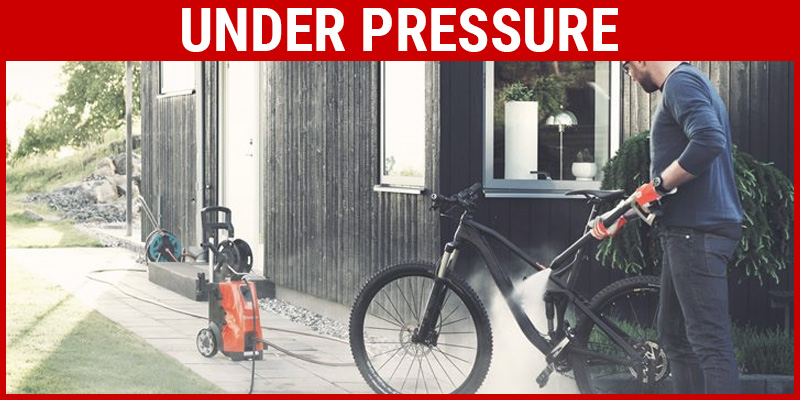
Here is a quick list of the most commonplace things that you can clean with a pressure washer: outdoor furniture, parking spaces, sidewalks, driveways, sidings, patios, decks, gutters, roofs, walls, fences, bicycles, and motor vehicles.
One of the most common uses for the appliance is driveway and garage cleaning. It makes sense because they are usually covered in tire marks and oil spills which can affect the kerb appeal of your property.
What can you clean using a pressure washer?
Imagine that you want to throw a barbecue party but you notice that the grill is a bit greasy, the patio could look better, the fence has accumulated grime, and on top of that – your outdoor furniture is not in top shape.
The good news is, of the above can be cleaned with a decent jet washer. You just have to change the pressure intensity and hose depending on the material of the surfaces.
You can make your vehicle squeaky-clean in about 25 minutes when using a pressure wash system. Just connect a scrubbing brush attachment and find some cleaning solution. It won’t be long before your paving is like new again.
The purpose of the nozzle is to allow the user to control the speed and flow of water. This way more pressure can be applied when an area is harder to clean, whilst protecting more delicate surfaces from damage. Distance is another factor that can be controlled with the nozzle.
Different machines have different amounts of pressure and are suitable for different applications.
Choosing the best pressure washer
Of course, everyone wants a quality product that works and will last a lifetime. However, as with most products, there is a solution to every requirement.
Entry-level
These little gems are good for small jobs like lightly soiled paving, bicycles, small cars and garden furniture. They are cheap (£40-£100), light to carry and can be found in supermarkets and hardware stores. A minus is that they tend to clean slowly, they can be noisier, and are not really designed for prolonged use.
Mid-range
A bit more expensive (£100-£200), middle-range pressure washers can take care of paved areas and decking, cars and 4x4s. In short: they are a good balance of value and performance. A good example is the Husqvarna 235R
Premium models
The serious end of the pressure washer market can be larger and heavier, and the extra power is reflected in the price (think £150-400). With long hoses, high power and flow rates they can complete the task in a fraction of the time. All that power needs responsible hands though, so there is a bit of a learning curve. The top of the range Husqvarna pressure washer is the PW480.
What are the benefits of pressure washing?
While you are scratching your head over what to consider when buying a pressure washer, know that this type of equipment comes with plenty of advantages:
It’s easy to use and some people actually find it quite enjoyable.
It doesn’t involve buckets of water, sponges and getting yourself dirty. You are practically just standing there blasting away the grime and dust.
Heights are not a problem as well because you just need to point the nozzle to the spot that you want to clean, so no more running around with ladders.
On another note, pressure washing is health beneficial, believe it or not. It destroys harmful substances, keeping your family breathing the purest air possible. Washing away algae and other buildups also minimizes the risk from incidents caused by slipping and falling.
When you think of deep cleaning, you probably associate it with volatile heavy-duty chemicals. However, in recent years we’ve seen that the use of such products has declined significantly thanks to jet washing as it is a nature-friendly alternative. It only uses water so it won’t bring any harm to the environment.
Recommended safety measures:
You will be surprised by the number of people that thought it was a good idea to spray their hand or foot with a top-of-the-range pressure washer. These daredevils often end up in the hospital with serious injuries like torn up skin. There are a couple of measures that you need to take, so you don’t end up like this. Gena Lorainne, a pressure washing expert (Fantastic Services in London) shared with us some essential safety measures you should always follow:
Wear goggles, long pants, closed shoes, and be extra careful on wet surfaces.
Always start with the widest spray angle. Begin by working with the nozzle 2 feet away from the surface and move closer as needed.
Don’t use a jet wash while on a ladder. Pulling the trigger could cause recoil and throw you off balance.
Don’t point the nozzle toward yourself, other people, or pets. (pretty self-explanatory)
Don’t use an extension cord with an electric-powered model.
And please, spare a few minutes to read the manual.
These are the basic recommendations that you can follow when investing in a pressure washer to ensure a pleasurable experience. Stay safe and have a good time when jet washing!
The RTX60 is Altrad Belle’s most popular trench rammer, and other models in the RTX range are tried and trusted for compaction projects nationwide.
Altrad Belle have been engineering compaction products with reduced Hand Arm Vibration (HAV) for decades, and their trench rammers continue their philosophy of safety and comfort when it comes to prolonged use. Belle are the No.1 for Light Construction Equipment and have over 50 years’ experience in equipment designed for use in the construction and rental industries.
What’s the difference between the RTX50 and RTX60?
The RTX50 was a similar model that has recently been discontinued, and the key difference between the two models is the impact force. This value increases the higher the model number, so the outgoing RTX50 model had lower weight and force.
The X in the RTX model naming refers to ‘extra’. This latest series of machines has been designed for extra power and extra durability. After all, the nature of compaction requires a hard-wearing, heavy duty impact, so the product is engineered to be robust.
Model
RTX50 – 230mm
RTX60 – 230mm
Engine
Honda Petrol
Honda Petrol
Engine Power
3Hp/2.3kW
3Hp/2.3kW
Foot Size (W x L)
230 x 335mm
230 x 335mm
Impact Force (kN)
12.5
13.6
Blows per Min
450-660
450-660
Carburettor Type
Diaphragm
Diaphragm
Weight
57.7kg
60kg
Difference between RTX60 and RTX68
Until recently Red Band had been supplying limited numbers of the RTX50 on an exclusive basis, but now the RTX range is limited to the RTX60 and RTX68. The RTX68 is the most powerful of Belle’s rammers, with an impact force of 16kN from a 70kg machine. Compared with the 60kg RTX60 with 13.6kN of force, the 68 model delivers the highest level of compaction.
Model
RTX60 – 230mm
RTX68 – 230mm
Engine
Honda Petrol
Honda Petrol
Engine Power
3Hp/2.3kW
3Hp/2.3kW
Foot Size (W x L)
230 x 335mm
230 x 335mm
Impact Force (kN)
13.6
16
Blows per Min
450-660
450-660
Carburettor Type
Diaphragm
Diaphragm
Weight
60kg
70kg
Each model of trench rammer for Altrad Belle can be used with a choice of rammer ‘feet’, which attach to the bottom and provide the impact profile into the material. The table above shows the 230mm foot, which is the most common. However, there is a microtrenching foot available, for much tighter spaces. The microtrenching rammer offers two lengths of 800mm diameter rammer feet for accessing narrow gaps.
For most tradespeople, tools are their biggest outlay. And while parts and equipment can be charged to the client, tools have to be bought from the business, so getting the most from this investment is essential.
In difficult times it is easy to ‘make do’ with tools that are maybe past their best or are not 100% fit for purpose, when in fact, investing in the right equipment is never more important. With the right tools, the job can be completed quicker and with greater ease. What’s more, the right tool can help create a cleaner finish, meaning less snagging issues.
When you look to invest in new tools or construction equipment, what do you look for? Is it power? Performance? Ease of use? Versatility? Here at Red Band we believe you shouldn’t have to compromise on any of these, which is why our range of block, masonry and tile saws offer something to suit every application. Whether you need a saw to make light work of concrete, bricks, ceramic or masonry, we have a wide selection of electric and petrol models to choose from.
Our range includes saws by big brands such as Husqvarna, Clipper and our own, Red Band range. To help you decide the right saw for you, here are our top five block, masonry and tile saws:
Husqvarna TS230F Tile Saw: As you would expect from Husqvarna, the TS230F is a quality piece of equipment, with a patented 45º cutting system and cutting guide that allows for fine adjustments. What’s more, the tabletop design and large non-slip surface make it ideal for wet cutting large tiles. Supplied with a 230mm diameter continuously rimmed diamond blade, the TS230F is available in 110v or 220v.
Red Band MB65 Tile Saw: Part of Red Band’s own range of tools and equipment, the MB65 has been developed to meet the tough challenges of life on site. Whether you need to cut floor tiles, wall tiles, roof tiles, stone or concrete slabs, the MB65 can handle it. With its swivel mounted cutting head, the MB65 is available is 110V and with a 14” blade.
Clipper CM501 Masonry Saw: A reworked version on the popular Clipper EDW Major masonry saw, the CM501 has many of the benefits of the EDW Major, plus a few more! Offering versatility and high performance, the CM501 is ideal for cutting small to medium sized materials such as bricks, blocks, concrete, stone and timber. In addition the CM501 has the same functionality as a core saw, perfect for cutting core samples, whether in a lab setting or out in the field. The contemporary design, ease of use and versatility of this saw sets it apart from its rivals, making it an extremely popular choice. The CM501 can be used wet or dry.
Clipper Jumbo 655 26″ Block Saw: When you need a heavy duty saw, the Jumbo 655 is ideal; powerful yet easy to use, the Jumbo 655 has been designed for cutting large stone and other building materials. Fitted onto four lockable wheels for added safety, the Jumbo 655 can achieve a cutting depth of 265mm and features an integrated water tank for dust-free cutting.
Red Band MB 14″ Bridge Saw: We couldn’t resist choosing another from the Red Band range! This time it’s the turn of the MB100, a versatile and tough bridge saw. Able to cut through everything from floor tiles to concrete slabs, it is a handy addition to any site kit. It is available in 110v, 220v or 415V depending on your intended use.
For more details and specifications on any of these products call the Red Band team on 0116 260 2601.
Chainsaw chains are typically at their most efficient near the beginning of their lifespan. Keeping your chain sharp and aligned correctly increases the quality of cuts and ensures your chainsaw is used to its highest potential on every project.
Husqvarna X-Cut chains have been designed in Sweden and developed for minimal stretch and maximum durability. Over time the cutter segments may become blunt or slightly misshapen, and Husqvarna file kits have been designed to maintain your chain without wearing down the material.
Using a Chain File
Here are the steps that Husqvarna recommend you take when using a file kit to sharpen the cutters on the chainsaw chain:
*Ensure the chain is tensioned
*Secure the chainsaw in a vice
*Activate the chain break on the machine
*Align the arrows on the file gauge towards the bar’s tip
*Rest the file on both rollers in the file gauge
*Using both hands, apply long, smooth filing strokes with both hands
*Note the same number of file strokes on each chain segment
*Mark the first completed segment to identify the starting point
*File all segments in the first side
*Turn the chainsaw horizontally to file again from the other side
*Once repeated on the other side, switch to a flat gauge
*Rest the gauge template on the chain according to the applicable wood hardness
Micro-Trenching is a fast, efficient and cost-effective process of creating a trench in the groundwork of an existing hard surface for the installation of cables / ducts which allow premises to be connected to the main fibre network.
The advantages of microtrenching are:
Much cheaper to install than conventional methods
Laying the cable is much quicker
Typically the road surface can be operational on the same day
Substantial reduction in disruption to road users
Environmentally friendly procedure
What doestheprocessinvolve?
Micro-Trenching involves using specialist equipment to cut small trenches along the street, often as thin as 20mm wide and 80mm deep, with a road saw using diamond blades. Microduct is then installed into the shallow trench and fibre pushed through to the premises. The whole trench is quickly sealed and the deployment is complete. This minimises disruption and cost without impacting on the quality of the duct installation.
Why useMicro-Trenching?
Conventional trenching is slow, damaging to highways and disruptive. Digging up roads and pavements to install new networks of any sort is never popular. Local residents dislike the disruption and the noise, while councils have to deal with increased congestion on busy roads, particularly if works overrun.
Installers therefore aim to get the job done as quickly as possible to minimise disruption and costs.
Unlike conventional methods, Micro-Trenching is an environmentally friendly procedure that is cost efficient, fast, incurs minimal inconvenience to the community, and produces aesthetically pleasing end results.
Micro-TrenchingMachines
Red Band have a range of Altrad Belle products that can be used in the process of Micro-Trenching.
Duo350X Twin Blade Saw
Twin bladed microtrenching floor saw to reduce the time is takes to cut-out the trench. This saw creates two cuts simultaneously which ensures an even width along the length of the trench.
RTX60M Trench Rammer with Extension Foot
Strong and durable microtrenching rammer with choice of 80mm or 100mm wide extension feet specifically designed for micro-trenching. This 4-stroke trench rammer has high level compaction for use on cohesive materials and gradients.
See our microtrenching package which includes the Duo 350X floor saw and RTX60M rammer at a discounted price when you buy together.
BHB25XS Low HAV Hydraulic Road Breaker
Low-vib hydraulic breaker with ultra-dampened head which reduces the HAV Levels whilst still offering a high breakout force. A range of breaker steels can reach into microtrenches to penetrate below the road surface.
Bulldog 20-140 Hydraulic Power Pack
Compact and portable hydraulic power pack with built-in Power On Demand system. Ideal power source for the Altrad Belle BHB 25XS Hydraulic Breaker.
PCLX320 Streetworks Plate Compactor
HAUC approved forward plate compactor with 320mm wide Dual Force baseplate for ‘Streetworks’ applications. Available as part of the highly popular PCLX Plate Compactor range from Altrad Belle.
HAV ratings are increasingly becoming a factor in choosing the right cutting or compacting equipment. Hand arm vibration refers to the buzz that travels from the machine through the handle to the user’s hand. In mild cases this can lead to discomfort, but there have been cases of Vibration White Finger and Carpal Tunnel Syndrome from extended exposure to vibrating equipment. For this reason, manufacturers have been putting extra efforts into reducing the HAV ratings of machinery.
In 2005 the government introduced an Exposure Action Value Limit (EAV), which requires the workplace to monitor and manage exposure to HAV levels above 2.5m/s². In practice, this would mean limiting the amount of time a worker uses such equipment, and offering aids such as gloves and foam handle dampeners.
The Exposure Limit Value (ELV) of 5.02m/s² is the maximum level a worker should be exposed to in a working day. As well as vibration levels expressed as metres per square second, every machine should have a ‘trigger time’, which is the amount of time taken to reach the EAV or ELV limits.
How to calculate safe usage times
Altrad Belle, who manufacture compaction equipment such as trench rammers and hydraulic breakers, have a long history of monitoring, research and innovation in order to reduce vibration levels on their equipment.
Belle’s Compact 350X floor saw has a listed EAV trigger time of 6 hours and 31 minutes, which is basically the amount of use before the Exposure Action Value of 2.5m/s² is reached. The trigger time to reach the Exposure Limit Value on that machine is over 24 hours.
If you already have the HAV rating then you can convert this into points, which effectively would translate to a usage time limit.
Vibration level (m/s²)
3
4
5
6
7
10
12
15
Points per hour
20
30
50
70
100
200
300
450
Exposure Action Value (EAV): 100 points per day
Exposure Limit Value (ELV): 400 points per day
For example, a plate compactor with HAV rating of 3.0 could be operated by the same user for 5 hours before work rotation measures must be taken. The overall limit value would therefore be approximately 20 hours. This of course is unlikely to occur during a normal working day for one operator.
How to reduce exposure to HAV
There are two areas that can reduce the exposure to hand arm vibrations from heavy duty machinery such as sawing, breaking and compaction equipment. One is simply to limit the amount of time a worker can use a machine, but the other is to reduce how much vibration is emitted from the machines themselves.
Manufacturers of construction equipment have used various methods to dampen the vibration levels of compaction and cutting equipment such as adding foam to the handle, or relocating the moving parts in relation to the handle. Certain materials and grades of metal will transfer lower levels of vibration, and typically the more distance between the impact point and the handle(s), the lower the HAV levels.
The key point at which HAV is experienced and measured is in the handle, or wherever the hand comes in contact with the machine. A recent innovation for plate compactors has come from Atlas Copco’s compaction division, now operated by Husqvarna. Special vibration dampening handles on forward compaction plates are ergonomically designed and strategically placed so that there is minimal travel of the vibrations from the main frame. The result is a level of vibration below 2.0m/s², thus allowing for a full day of use without excessive risk of injury.
When it comes to being in the Construction/Building industry, Twitter can be a great source of information and inspiration for future projects. However, with so many accounts on this topic, which are the best ones to have on your timeline?!
Here at Red Band UK, we’re always talking about the latest construction tools or interesting industry news that we’ve seen on social media. So we thought we’d share with you our favourite Twitter accounts to keep up-to-date with the latest updates in the construction sector. Get following!
Tweeting updates on the leading companies and major projects in construction that you should know about. A great account to follow for the low-down on the biggest headlines right now.
As a Marketing Consultant for small, medium and micro Construction companies, John shares his expertise on the latest construction news. As well as interacting with other leaders in the industry.
The Construction Junkie Twitter account shares the coolest stuff in construction. Follow these guys if you want to see more on the latest construction tools or tech events!
Go Construct focuses on building great workforces within the construction sector. Their Twitter account shares interesting insights into the best ways to attract, inform and retain a talented team. They do great things to push a bigger focus on young people and women in construction too.
For young people wanting to get into the building industry, this is the Twitter account to follow. They share all the latest on upcoming events and projects. As well as sharing stories as told by other young people that have found a career in the industry.
As a business development and marketing manager for a large architecture firm, Karen knows just what it takes to develop and successfully run a firm within the Architecture, Engineering and Construction Industry. Follow her on Twitter for the latest projects and all you need to know about modern architecture.
The RICS is the independent body who are committed to upholding the standards of excellence in land, property and construction. Experts share their insights and advice on how to gain globally recognised business standards.
Known as “The magazine for owners and operators”, the Earthmovers Twitter account shares all you need to know about the latest developments in compact, construction and mining machinery. Great for those who love to check out the coolest new diggers, bulldozers and dumpers!
This Twitter account and digital magazine covers the latest news and insights into supply chain issues and opportunities facing global executives. Their content also makes for a very interesting read as they will regularly feature exclusive interviews with household names in the world of construction.
As an owner of a Social Media Consultancy that is exclusive to the Construction Industry, Su Butcher is an expert in helping companies in this industry use their voice effectively via social media platforms. As well as her own experiences, Su shares insights into how she has helped companies to communicate better with architects.
Any Project Managers or those considering a large-scale job need to follow Construction Executive. Their news posts include top tips on how to stay within budgets and stay on-schedule.
As a Consultant, Architect and Educator, Aarni Heiskanen’s Twitter account and blog are great resources for those wanting insights into the latest developments by influential companies within the industry. He also shares success stories and advice on how to increase your construction company’s success through innovation.
This Twitter account shares all the latest in construction management and software news and reviews form Capterra. As well as as sharing any of the latest goings-on within the construction industry that you should know about.
As an expert within the industry, Liz shares fantastic advice and updates on property, construction and sustainability. Follow her Twitter for some interesting insights.
For all of the latest updates on UK construction, analysis and data, make sure you’re following Construction News on Twitter. They provide you with the latest updates in short, concise tweets so you can simply find out exactly what you need to know.
Construction Manager is the largest circulation construction magazine in the UK and, with a huge following on Twitter, it is certainly an account that construction professionals should be following. Not only do they share any updates on the biggest names in the sector, they also tweet interesting alternative articles around architecture, construction projects and technology.
Buildingtalk is a news and information website for architects, specifiers and other industry professionals within the building sector. Their Twitter account reflects their fantastic blog and provides followers with the most important updates in the world of Construction within the UK today.
This Twitter account is one to follow if you would like to keep up-to-date with the most innovative construction projects happening across the UK and beyond. There are some amazing projects featured on this Twitter account and it just may give you some inspiration for your own!
The Construction Expert Twitter account focuses on sharing innovative building products, projects and expert top tips. A great one to follow if you run a construction business yourself or simply want to keep up with the latest industry trends.
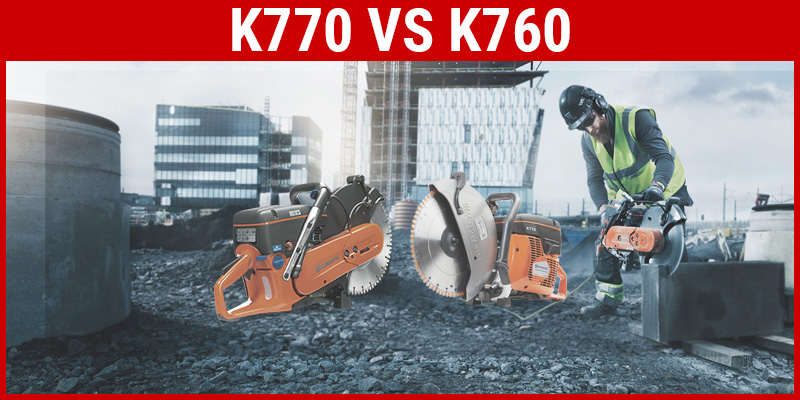
With the recent introduction of the Husqvarna K770 disc cutter, we thought you might appreciate a comparison between the K770 and the K760.
The Husqvarna K760 has been the benchmark for handheld disc cutting for over a decade thanks to its reliability and performance. Husqvarna’s flagship disc cutter delivers exceptional cutting of bricks, blocks and slabs with a superb power to weight ratio.
Although the K760 has been known as the market leading disc cutter, the new K770 model still has a number of incremental improvements.
Comparing the K770 to the K760
The main element which the designers worked on for the new machine is the digital ignition. Husqvarna’s DuraStarter™ technology was present in the K760, but the optimised timing of the ignition spark has further improved on the latest model.
The cutting arm of the K770 is even more rigid and robust thanks to the reconfigured three-bolt joint that attaches to the cutting head. This provides a more heavy duty feel and reduces the need for replacement parts.
The longevity and performance of the drive belt can be a key factor in the frequency of service and repair visits, so Husqvarna have introduced SmartTension on the latest model.
These changes have improved the stability of the K770 whilst still limiting the vibration levels to a maximum of 3m/s² and the weight to 10kg. This still delivers a power to weight ratio of 0.37.
Specifications of the K770
K760
K770
Power to weight ratio
0.39
0.37
Weight*
9.6
9.9
SmartTensioning?
No
Yes
Handle vibrations (m/s²)
2.4
3
*weight excludes blade, oil and fuel
Model variations of K760 and K770
The most popular variant of the Husqvarna K760 and K770 disc cutters has been the standard petrol model, available in 12″ and 14″ versions.
Oilguard versions of Husqvarna disc cutters include the K760 Oilguard and K770 Oilguard. This technology was developed to reduce the risk of misfuelling, as applicable models are designed to recognise the pigment in Husqvarna Oilguard oil and will place the machine into limp mode if an insufficient oil/fuel mix is present.
The K760 Cut-n-Break uses a pair of special blades and a unique breaking tool to cut channels with up to 400mm depth when cutting in stages. The K770 version will soon be on the market with improvements that are similar to those between the standard K760 and standard K770 machines.
The K770 Rescue disc cutter is built for specialist jobs, with extra features including a chromium-plated blade guard, oversized starter handle and improved adjustable carry strap. These make the machine highly visible in dusty and steamy conditions as well as easier to operate when wearing heavy gloves.
New variants of the K770
In recent years there have been three new models of Husqvarna K770, the K770 Vac, K770 Dry Cut and K770 SmartGuard.
The K770 Vac and Dry Cut cater for those who don’t have access to a water feed. The Dry Cut model has an integrated fan and vacuum, which connect to a dust bag for easy collection. The K770 Vac is designed to be connected to an external dust extractor.
The newest variant of Husqvarna’s flagship machine is the SmartGuard, which includes an extended guard/guide for increased safety and accuracy on site.
The landscape of disc cutting
The future of Husqvarna disc cutters is set to involve even more innovation, as every aspect of the cutter is incrementally improved. Feedback from end-users, innovations in technology and evolution of design will continue to contribute to further improvements in the products on the market. If you need to find out more about disc cutters and blades please contact us.